Press Release · XTransfer
Building Digital Trust Where Trade Happens
Distributed by Seedtime Money · Originally issued via PR Newswire
Why fraud prevention in B2B payments starts with understanding the business, not just the transaction
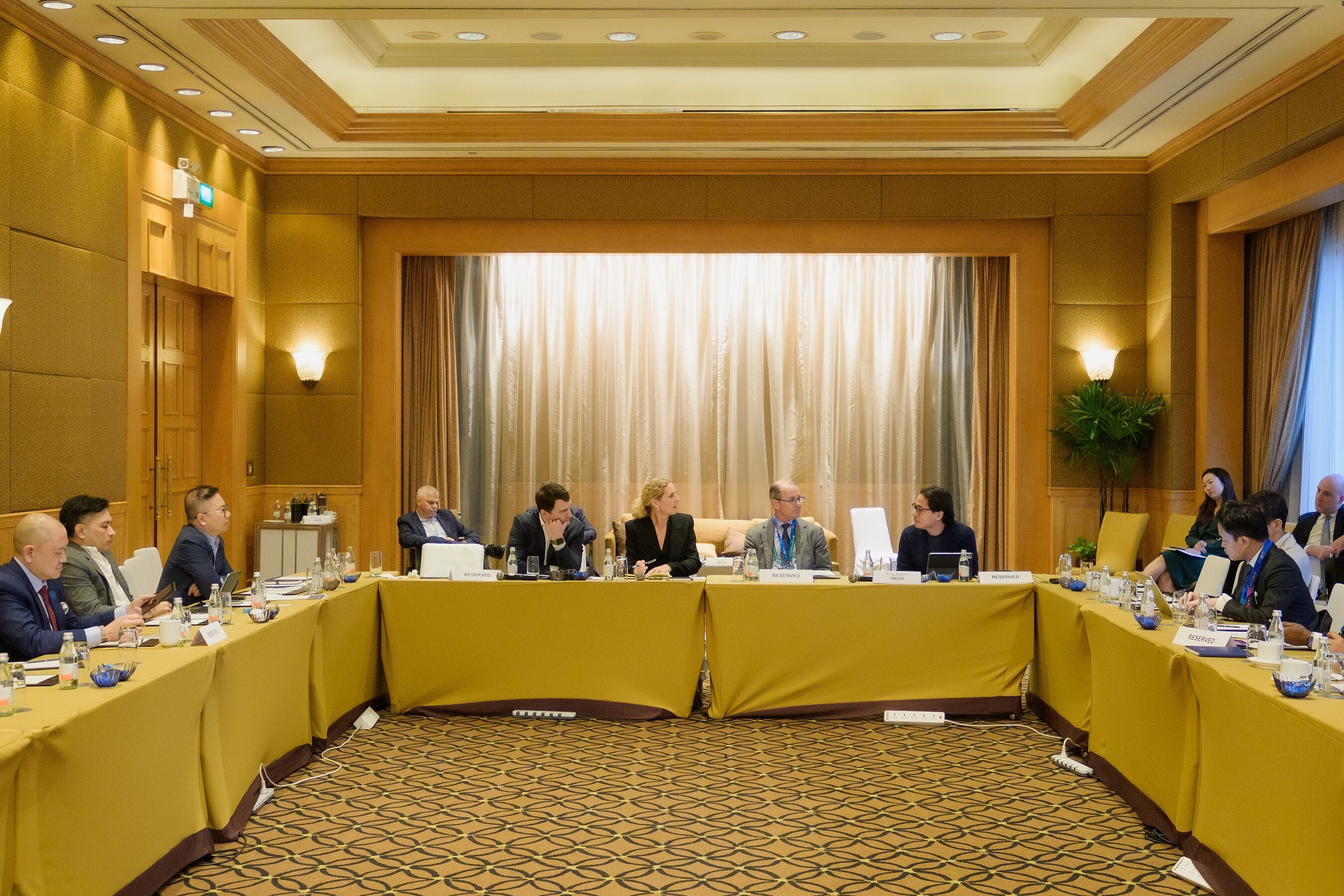
BANGKOK, Nov. 10, 2026 — Recently, in response to the growing threat of cyber-enabled fraud, Bill Deng, Founder & CEO of XTransfer, has shared Three Lessons from the Front Line. Financial inclusion has been a quiet success: the World Bank's Global Findex 2025 puts account ownership at 79% of adults, up 28 points in a decade. But the Global Anti-Scam Alliance reports nearly 60% of adults encountered a scam in 2025, and a quarter lost money. Faster rails speed up legitimate and fraudulent payments alike. The Bangkok Blueprint, launched by the IMF, World Bank Group and Bank of Thailand at the 2026 Annual Meetings, frames the response correctly: cyber-enabled fraud is an ecosystem problem no single institution can solve alone.
A framework sets the direction; it does not tell an operator what to do when a payment looks unusual. Three lessons from the front line.
Speed is not the same as judgement
Automation has transformed screening. It absorbs volume no team could handle and flags anomalies in seconds. But consistency is not understanding. A model can say a transaction deviates; it cannot say whether that reflects a new customer, a seasonal order-book shift, or a fraud typology never seen in training. In B2B payments, the payment message carries almost none of the commercial history behind it: the inquiry, purchase order, shipment, invoice. Reading the underlying trade is often what separates an unusual but legitimate payment from a suspicious one. Frontline teams who know how a small exporter operates belong inside the control environment.
Share the principles; calibrate the controls
Asia-Pacific is the best test bed precisely because it is heterogeneous: regulation, rails, customer behaviour and fraud patterns differ sharply across markets. Exporting one operating model is a category error. What travels is a common language, shared risk principles and typology frameworks describing how schemes are structured, not one prescribed technical response. Controls must be calibrated locally. A multi-market compliance footprint earns its keep here: operating under several regulators forces you to separate what is universal from what is merely habitual.
Intelligence should move as fast as fraud
Fraud techniques migrate; a pattern seen in one corridor reappears, adapted, in another. If every institution treats detection as a private asset, everyone downstream starts late. Regulator-supervised, privacy-protecting sharing can turn one market's signal into another's early warning, without identical rules everywhere. More connected SME payment infrastructure helps too: today it is fragmented among banks, providers and jurisdictions, each seeing a narrow slice. The chain rarely starts in finance at all; it may begin on a social platform, marketplace or telecom network. Institutions, platforms, regulators and law enforcement each hold a fragment, which is why public-private engagement is not a courtesy but the mechanism of trust.
Access will keep expanding; whether it endures depends on trust, the cumulative result of fast technology, experienced people, controls that fit their market, and institutions willing to share what they learn. For those building infrastructure for small traders, the obligation is simple: make the safe path the easy path. Security that excludes legitimate users defeats the inclusion it protects.
The author first set out related views in a WEF Financial and Monetary Systems discussion (23 October 2026). https://www.weforum.org/stories/financial-and-monetary-systems/two-ceos-discuss-technology-enable-financial-inclusion-preventing-fraud
This is an original expansion for XTransfer's own channels; it does not reproduce or adapt the WEF text. Views are the author's own, not those of the WEF, IMF, World Bank Group or Bank of Thailand. XTransfer contributed private-sector experience to the Annual Meetings' digital safety discussions; no endorsement is implied.
SOURCE XTransfer